
Guide Story Series: Old Habits – Allan Hyggen

Allan Hyggen, 1983
I think I was 21 (1986) when we began moving the camp down to Baronet Passage – John Reid wanted access to the migrating stocks of Johnstone Strait and the mid season move was instantly a welcome break from the Knight Inlet westerlies. I’d been guiding for about three years and finally getting a handle on it; boat skills, fishing and tackle skills, people skills all began to coalesce for me. Of course Steve and John knew the area better, were excellent fishermen, knew the weather, had history with guests and in their easy way, seemed unmatchable. Arriving at Pitcairn in Baronet pass for the last half of the season meant new water for all of us: a levelling of the fishing ground.
Fishing up Knight inlet had taught me many things well – early bites, earlier wake ups, stick to spots you know will turn on, stay tight to the bottom, know your gear, sticky hooks all the time, check your leaders and line after every fish, check lines religiously, small details matter with everything when your fishing; and yet, occasionally be bold, leave early for another spot, try something new, always gas up the night before, make sure people have rain gear – you’re responsible for coffee, Its more important people have a good time, than to catch fish (buts it close). Our new area included, Cracroft Point, White Beach, The Wall, Flower Island. We applied our skills, We had our plugs and we were up early – we learned the tides and we did well after we sorted things out. The early bite was the best and we soon learned also the least crowded. You could fish alone for the first hour or two in stark contrast to the later morning and afternoon crowds that slowly gathered. I took pride in being first down Cracroft point – under a dark blue sky, and often with bait teaming on the surface, I’d slowly and carefully glide down, trying to fish it perfectly and usually the fish were there.
One early morning i set my gear and began the drift. I was tired but happy and full of quiet anticipation – fishing with the tide, sliding down towards the tip, lines set, depth right, faithful plugs down, engine quietly puttering, – the tide doing most of the work. I cut in as tight to shore as depth allowed. And then, I thought I heard a voice. I looked up and scanned the shore as best I could and then I heard the same voice “ya, just give me sec”. Slowly a speedboat materialised directly between me and shore – the boat, an obvious lodge setup was stalled in the kelp bed about 100 feet from me and the guy in the stern was hunched over a net muttering. I could see him clearly now in his white sweater and then he strained to lift a big spring into a fish box. He looked up at the same time and gave me a wave – young skinny blonde guy, big smile friendly. I nodded coldly saying nothing, but I wasn’t happy. A new guy…well, newer than me, up early, in tight, big fish, friendly good fisherman.
I immediately considered the whole area compromised and this new guy an imminent threat. To make it worse he stuck around and then began to continuously beat us out in the morning which seemed insane. You would’ve had to travel in the dark, before the sun was even colouring the dawn. One morning we saw his navigation lights taking a shortcut through shallow water studded with rocks and kelp at full speed to shave off time. To make his transgressions complete and deeply personal, he was a deadly fisherman and a good competitive guide. He would never give you the inside unless you fought him for it and made it clear you were not going to change course. You were pretending to check and tie tackle or you were talking to guests, and you had your hood up with your peripheral vision impaired. Anything to give the impression you did not see, care or expert another boat to pass on the inside of you until at the last second, as impact seemed unavoidable – you turned into shore, not away. This conveyed for later encounters that you would rather collide, or find yourself on the beach than give way. Only then would he waiver and steer out and away from shore.
I should say that this was typical of a first encounter at any spot and once a routine had wordlessly been established, it was somewhat reliable unless you carelessly allowed space for one boat to fish between you and shore. In which case it was entirely expected and grudgingly accepted that the other boat would naturally take the space.
As the season went on, we got to know each other, due partly to our shared desire to maintain close quarters while fishing and also because we were good guides. We shared a mutual respect and after a while a collegial friendship developed. He fished a huge herring with no teaser head, We fished lucky Louies almost exclusively. Our distinct four-pack of blue boats was dwarfed by his lodge’s potential to put more on the water but he felt a bit more like us. We both shared fishing as tight to shore as possible, we shared tactics and knowledge, we knew if we saw him in a spot, it was worthwhile to check in. We named him Blondie. His name was Chris we learned later.
Blondie started a lodge close by a few years later. It seemed inevitable, a natural extension. His lodge was a small floating place with amber woodwork, and grey weathered cedar decking, a wood stove for heat, two other guides only, but in new 19’ open Quests, double down riggers (considered over the top at the time). It was a pure fishing lodge much like ours in most respects. I want to think he liked our approach and took some of it for his own.
I was remembering all of this in 2015 as I fished along the top of Malcolm Island with my sons. It was early and to make it a little more painful, yet somehow better, we were camping on the island, at Bere Point. I still had my blue boat from 30 years previous, a wedding gift from my thoughtful guide friends in 1994. We were about 70 minutes north of Cracroft Point.
I’m getting better at fishing those waters as a recreational fisherman and not a guide. It’s a long road but I’m getting better now. I’m still intense at times but I’m not out of line (just ask me). We were fishing on a weekend morning which provided many boats on the water. These days it’s easier to tell guided boats as they have lodge names, expensive hulls, and big power. They fish exactly where I would but I don t compete with them. To me, they are working and I give way allowing a respectful distance in all directions. I’m also ready to lift my gear if they hook up. While I’m not as competitive, I’m still trying. If boats are three deep, I’m on the inside lane if I want to be. I follow port to port navigation regs but only when a collision seems possible – otherwise I’m inside.
On this quiet calm sunny morning I watched a guide boat heading towards shore and carefully slide into a small notch no one else knew about and immediately hooked up. He was efficient and calm, kept everything under control, and didn’t even lose his spot on the inside . I’d never seem him before and there was no name on his boat that I could make out. I was glad to be out of the competitive mode and when we next met head to head, I nudged my bow out to signal he could have the inside, which he took. We silently nodded to acknowledge each other. A little later as we approached each other again, bow to bow, I thought “no, let him have it” and again – I gave way. He noiselessly took the inside. On the third meeting, I expected him to give way – he would know my open blue boat by now and surely give way and turn out. We were about 150 feet apart and both fishing tight to shore in 55 feet of water. Rather than turn out, I turned in towards shore and indicated my intent. He pretended to check his gear, turning his back to me. At 100 feet I turn further in and turn my back to him while I relieve myself over the transom. At 50 feet he sits stoically looking towards shore – I put my feet on the flotation tank and watch the sounder, the picture of contentment. At 25 feet he veers in. At 20 feet I stand and stare at him as if a thousand expletives could be summoned wordlessly. At the very last second he cuts to the outside aggressively.
His swim grid missing my bow by less than 5 feet. I sit down and passive aggressively wave as he glares, his hood up, ill kept grey beard betraying his age. His eyes are burning in the shadow of an old ball cap, which he lifts slowly and prepares to speak. I m about to turn away but he surprises me when he says
“Allan?”
He peels the hood back – lifts his cap – i make him out
“Chris?”
We both laugh as testosterone levels dip. It’s been thirty years and we had not seen each other in the intervening decades. It only makes sense that we would meet under these circumstances now that we are here when 30 seconds ago we were cursing each other under our breath. But now we are old friends. He says he hasn’t seen a blue boat in 30 years, which I believe.
I’ve seen him more recently as I now return to guide for Coastal Springs each summer. I feel incredibly lucky to pick things up again when in the end, not everything has changed.
Allan

Allan Hyggen, 2023
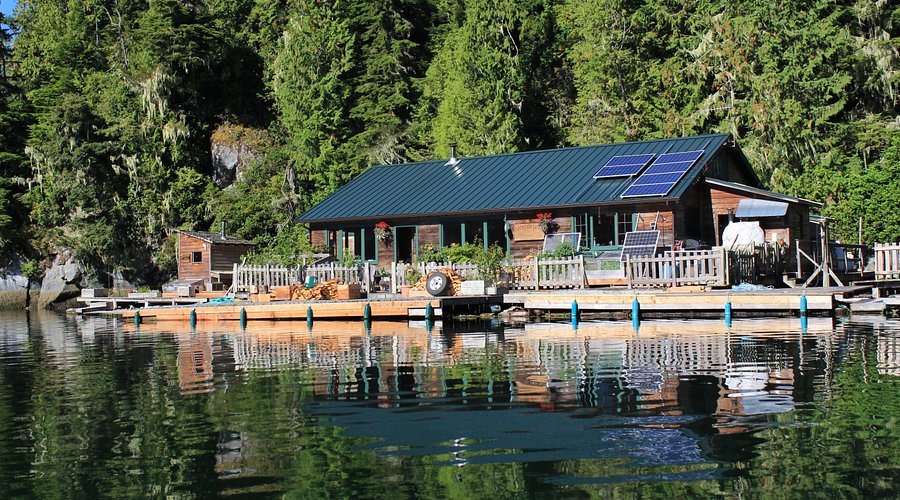
Chris Bennet’s Blackfish Lodge, 2025
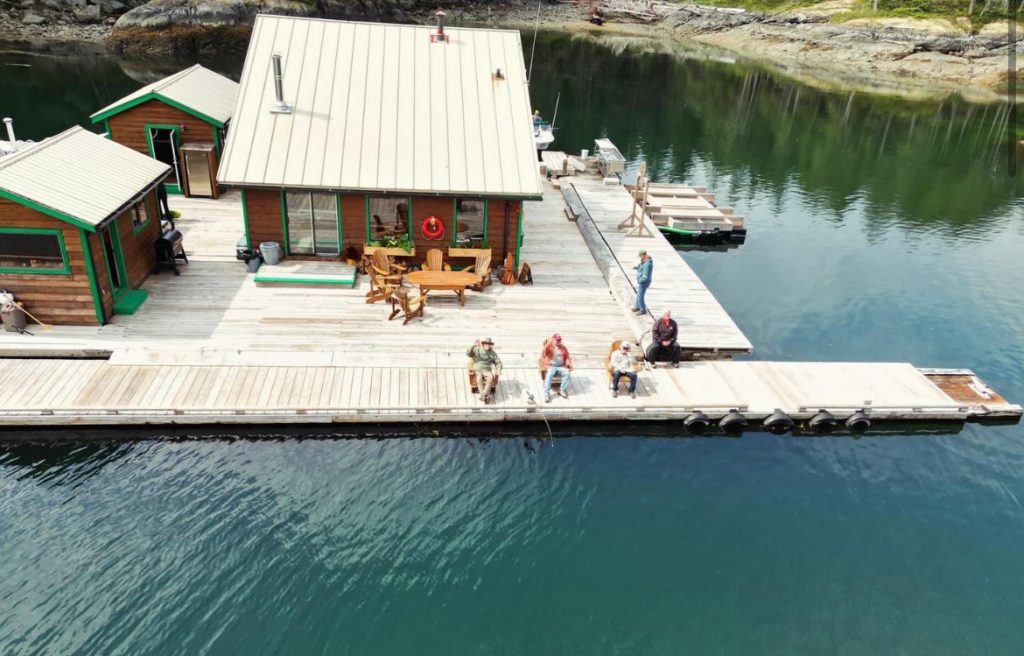
Coastal Springs Float Lodge, 2025